MyPeptideShelf
Injection site rotation: a simple way to keep track
If you inject under the skin regularly, you've probably been told to rotate your injection sites. That's simple in theory and easy to lose track of in practice, especially with a weekly shot. Was it the left side last time, or the right? This guide covers why rotation matters, the areas most guides mention, and a simple way to remember where you went last.
Why rotate injection sites?
Injecting into exactly the same spot again and again can lead to lumpy, thickened or tender areas under the skin. This is sometimes called lipohypertrophy. Medication may also absorb less predictably from those areas. Changing where you inject each time gives each spot a rest. That's why many medication guides tell you to use a different site, or a different spot in the same area, every time.
Common areas for under-the-skin injections
For subcutaneous (under-the-skin) injections, medication guides most often list:
- Abdomen: the stomach area, usually keeping a couple of inches away from the belly button.
- Thighs: the front and outer thigh.
- Upper arms: the back of the upper arm, which can be easier with someone helping.
- Upper buttocks: listed in some guides.
Your medication's own instructions say which of these apply to you. Most guides also say to avoid skin that's bruised, tender, scarred, hard or irritated.
A simple rotation pattern
The easiest rotation is one you don't have to think about. Pick the sites that are right for you, put them in an order, and move to the next one each time. For example:
- Left abdomen
- Right abdomen
- Left thigh
- Right thigh
Then start again. Within an area, choose a slightly different spot from last time. Many guides suggest keeping new injections about an inch away from recent ones.
Remembering where you went last
A pattern only works if you know where you are in it. With a weekly shot, a week is long enough to forget. Some people keep a paper chart. Others write it in a notes app.
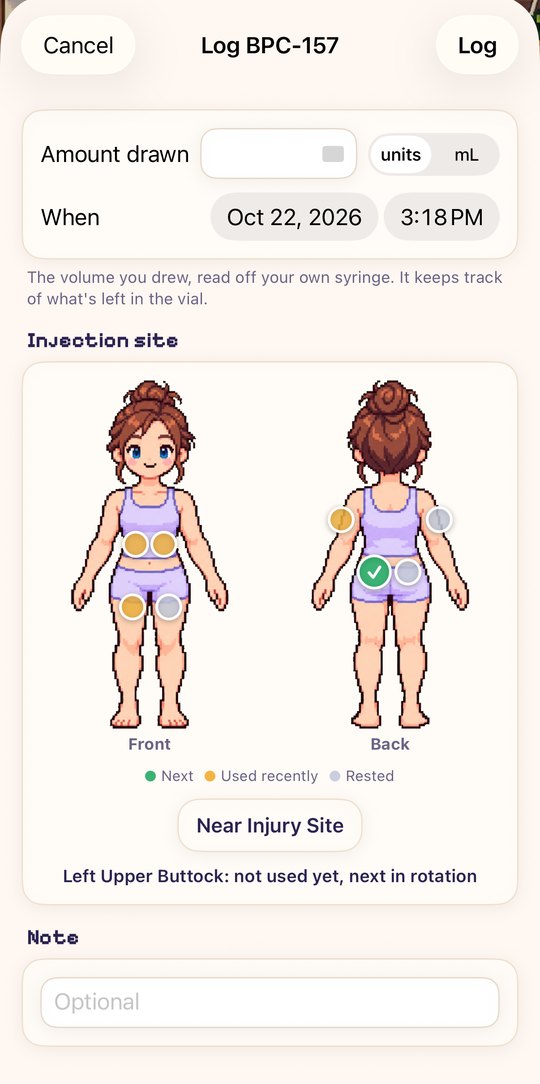
MyPeptideShelf has a body map built into logging. When you log a dose, you tap where you injected. The map then colours each site by how recently you used it, and marks the one you've rested longest as next. Your recent sites also show on the Progress screen, so there's no counting back through old notes.
Quick answers
Why should I rotate injection sites?
Using the same spot repeatedly can cause lumpy or thickened skin (lipohypertrophy) and less predictable absorption. Rotating gives each area time to rest. Follow your medication guide's instructions.
Where can I inject under the skin?
Medication guides most often list the abdomen, the front of the thighs and the back of the upper arms, and some list the upper buttocks. Your own medication's instructions say which apply to you.
How far apart should injections be?
Many guides suggest about an inch from recent injection spots, and a couple of inches from the belly button. Check your medication's instructions.
How do I remember which site I used last?
Keep a log. In MyPeptideShelf you tap the site on a body map when you log a dose, and it marks the site you've rested longest as next.
Sources
Track it in MyPeptideShelf
Vials, doses, sites and reminders in one cozy, private app. Free to start.